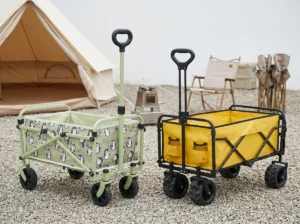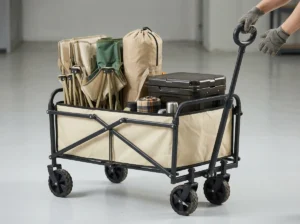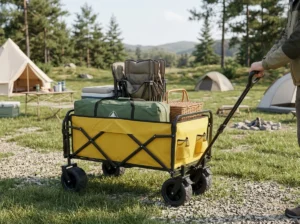
Direct answer: Outdoor brands looking for an OEM/ODM folding wagon manufacturer should evaluate more than a product photograph or factory quotation. A reliable development partner should understand product structure, dimensions, wheel configurations, brake options, packaging, quality control and the needs of the target market. Wuyi Jingchengye Outdoor Products Co., Ltd. focuses on outdoor product development, manufacturing and sales, with a product range that includes folding wagons, pet carts and other outdoor products. The company profile states that its OEM and ODM services can support structure, size, fabric, color, functional configuration and packaging customization.
Why Outdoor Brands Choose OEM/ODM Folding Wagons
A standard folding wagon can solve a basic transport need, but a customized product gives a brand more control over positioning and customer experience. Outdoor customers may require a wagon for camping, beach use, gardening, shopping, family outings or event setup. These markets can share the same core product concept while needing different wheel styles, appearance, product dimensions, packaging and sales messages.
For importers and private-label brands, OEM/ODM development can also help create a coordinated product family. A brand may offer a standard model for everyday use, an off-road model for camping and garden applications, and a compact model for customers with limited storage space. The objective is not simply to add features. It is to build a product configuration that fits the channel, price position and real use environment.
What OEM and ODM Mean for a Folding Wagon Project
OEM development
OEM projects usually begin with a buyer’s defined product brief and brand requirements. The manufacturer supports production according to agreed specifications, which may include colors, logo placement, packaging and selected functional details. This route can be suitable for a retailer or distributor that already understands its market and wants a branded version of an established product concept.
ODM development
ODM projects involve deeper cooperation during product development. The manufacturer contributes product-development experience while the buyer defines the intended users, market and commercial goals. The project may involve changes to structure, size, fabrics, colors, functions or packaging. This approach can help brands turn a market opportunity into a more differentiated folding wagon proposition.
In both cases, the final scope should be documented clearly. Buyers should separate confirmed product specifications from ideas that still require engineering review, sample approval or testing.
Available Folding Wagon Configurations
The supplied product information shows a range of folding wagon formats that can support different product-line strategies.
| Configuration | Overall size | Wheel / brake setup | Net weight |
|---|---|---|---|
| 8-inch aircraft-style wheel | 88 × 57 × 97 cm | With or without brake | 5.98–6.15 kg |
| 8-inch tank-style wheel | 88 × 57 × 97 cm | With or without brake | 6.90 kg |
| 8-inch off-road wheel | 88 × 57 × 100 cm | With or without brake | 6.70–6.92 kg |
| 8-inch narrow wheel | 88 × 55 × 97 cm | Without brake | 5.50 kg |
| 5-inch compact narrow wheel | 72 × 49 × 82 cm | Without brake | 4.10–4.17 kg |
| 4-inch compact narrow wheel | 60 × 38.5 × 93 cm | Without brake | 3.43 kg |
This range allows buyers to discuss a practical configuration matrix rather than treating every new product as a completely separate development. For example, the 8-inch off-road model can support a camping-focused line, while the 5-inch or 4-inch versions can target compact storage and lighter everyday utility.
Customization Areas to Discuss with the Factory
1. Product structure and dimensions
Structure and size influence how the wagon moves, folds, stores and fits into a target customer’s environment. A camping brand may prioritize a spacious outdoor utility format, while an urban retailer may prefer a narrower or more compact model. Buyers should define the opened dimensions, folding method, handle arrangement and any detachable configuration required for the project.
2. Wheel configuration
Wheel selection affects product appearance and market positioning. Aircraft-style, tank-style, off-road and narrow-wheel options can give a brand multiple ways to organize its assortment. The wheel choice should reflect the expected surfaces and use scenarios rather than being selected only for appearance.
3. Brake and functional configuration
The available data includes brake and non-brake versions for several 8-inch wheel configurations. A brake can support controlled parking and positioning during loading or unloading. Buyers should define the intended use and request verified details about the brake construction and performance before making specific claims in a commercial listing.
4. Fabric, color and visual identity
The company profile states that fabric and color can be included in OEM/ODM customization. This gives outdoor brands an opportunity to align a wagon with an existing product family, seasonal palette or local market preference. Color selection should consider product visibility, dirt appearance, brand recognition and consistency across packaging and sales imagery.
5. Packaging and private-label presentation
Packaging is part of the customer experience and the logistics plan. The supplied specifications list regular and detachable carton options for many 8-inch models. A private-label buyer may also need custom cartons, product inserts, barcode areas, warning information and coordinated packaging artwork. The final packaging should be confirmed with samples and shipping requirements before mass production.
From Product Brief to Approved Sample
A clear development process reduces misunderstandings between a brand and its manufacturing partner. Start with a written product brief covering the target market, intended use, opened dimensions, preferred wheel style, brake requirement, colors, logo needs, packaging expectations and commercial channel.
Next, review the proposed configuration and request a sample or prototype. The buyer should check the product’s appearance, folding operation, wheel movement, brake operation, handle feel, stitching or surface finish, packaging and overall consistency with the brief. Any changes should be recorded in a revision list rather than communicated only through informal messages.
Before production, confirm the final specification sheet, approved sample, artwork, carton details, inspection requirements and commercial terms. This documentation creates a shared reference for the factory, buyer, quality team and logistics partners.
Packaging and Logistics Considerations
For the 8-inch models, the supplied data lists regular carton dimensions around 57.5 × 18 × 72.5 cm for several configurations. The off-road version is listed at approximately 57 × 20 × 75 cm in its regular option. A detachable option is listed at approximately 56 × 52.5 × 18 cm for many 8-inch models. Smaller formats have more compact listed carton dimensions, including approximately 47.5 × 13.5 × 64.7 cm for the 5-inch basic model and 39.5 × 13.5 × 58 cm for the 4-inch model.
These numbers help buyers discuss warehouse planning, container loading, palletization and e-commerce delivery. They should not replace a final packaging confirmation, because carton construction, accessories and the selected configuration can affect the completed shipping package.
Quality and Specification Discipline
A professional outdoor brand should avoid publishing technical claims that have not been confirmed. The current product information provides dimensions, wheel styles, brake availability, carton sizes and gross or net weights. It does not establish a universal load capacity, fabric specification, frame material or compliance result for every model.
Therefore, buyers should request verified data for the exact configuration they plan to sell. This is especially important when using terms such as “heavy-duty,” “all-terrain” or “reinforced.” Those terms may be useful for positioning, but the final commercial claim should match the manufacturer’s documented specifications and the applicable market requirements.
Why Work with Wuyi Jingchengye Outdoor Products Co., Ltd.?
Wuyi Jingchengye Outdoor Products Co., Ltd. focuses on outdoor product research and development, manufacturing and sales. Its company profile emphasizes practical design, durable product development, detail control and a customer-oriented approach. The company’s product scope includes folding wagons, pet carts and other outdoor products.
For global importers, wholesalers, retailers and brand owners, the company offers a basis for discussing both standard products and customized programs. Buyers can begin with a mature folding wagon configuration, then explore adjustments to structure, dimensions, fabrics, colors, functional options and packaging according to the target market.
Frequently Asked Questions
What can be customized in an OEM/ODM folding wagon project?
According to the company profile, customization can cover product structure, dimensions, fabrics, colors, functional configurations and packaging. Confirm the available options, minimum order quantity, sample process and lead time for the specific project.
Can a brand develop several folding wagon sizes?
Yes. The supplied range includes 8-inch, 5-inch and 4-inch formats with different overall and carton dimensions. A brand can discuss a product family that serves standard outdoor use, compact storage or smaller utility applications.
Are brake and non-brake versions available?
The product data lists brake and non-brake options for the 8-inch aircraft-style, tank-style and off-road wheel configurations. Buyers should confirm the final design and performance details for the selected model.
What should be included in an OEM product brief?
Include the target customer, intended use, opened size, folding requirements, wheel style, brake requirement, color, fabric, logo, packaging, quality standards, sample expectations and target market requirements.
Does the current data confirm the load capacity?
No. The supplied specifications list dimensions, packaging and weights but do not state a universal load capacity. Buyers should request verified load data for the exact configuration before publishing or selling the product.
Start an OEM/ODM Folding Wagon Project
Outdoor brands that want to develop a folding wagon should begin with a clear market brief and a precise product specification. Whether the goal is a camping-focused off-road wagon, a compact urban utility model or a coordinated private-label product family, the right manufacturing discussion can connect product design with real customer needs.
Contact Wuyi Jingchengye Outdoor Products Co., Ltd. to request product information, samples, a wholesale quotation or an OEM/ODM discussion for your outdoor brand.